
Last updated November 22, 2026
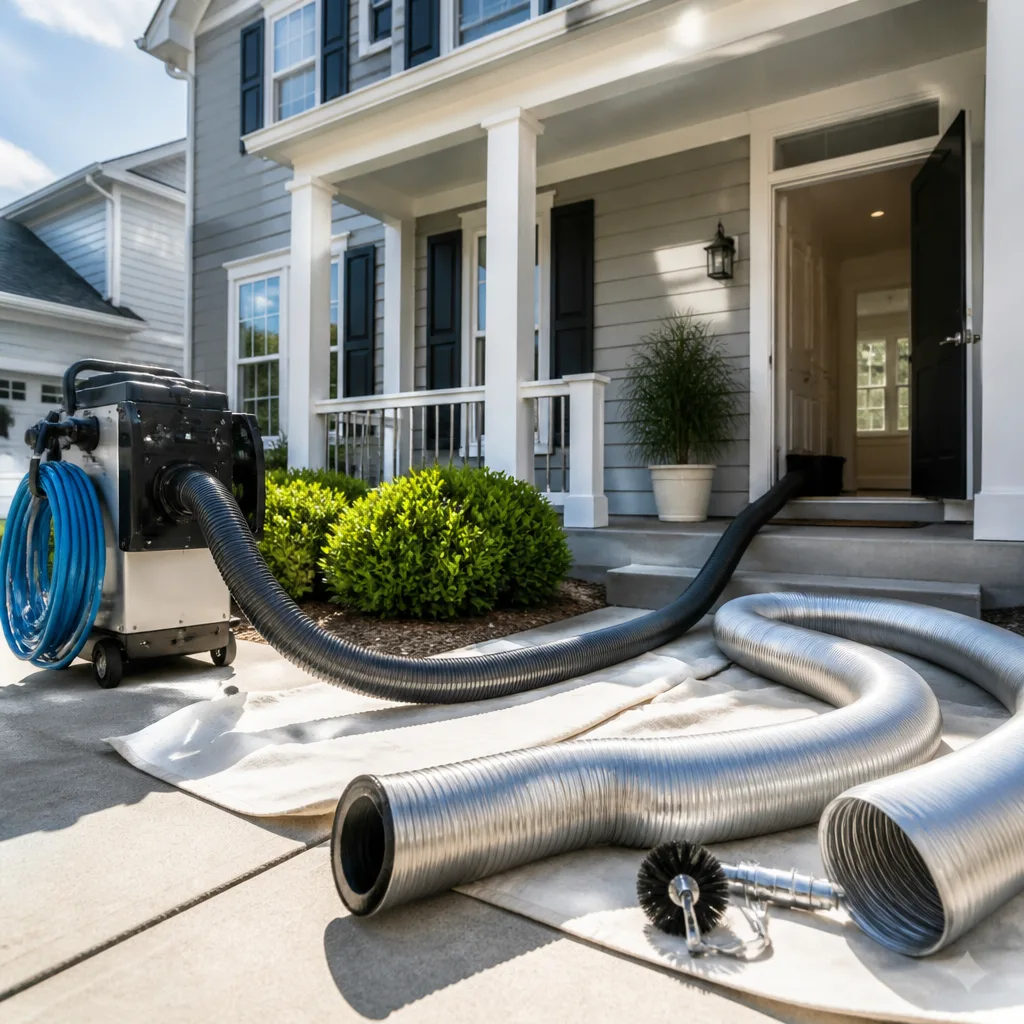 Whole-home duct cleaning
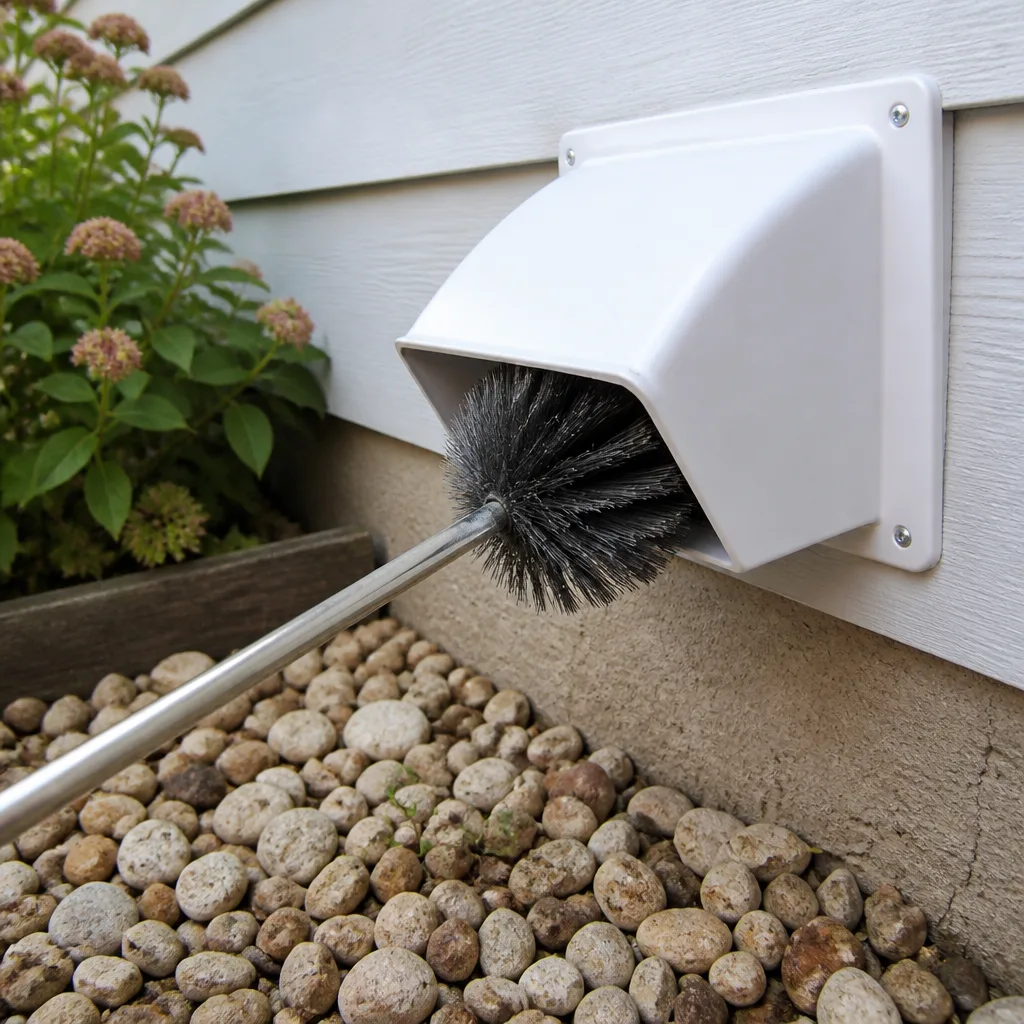 Dryer vent cleaning
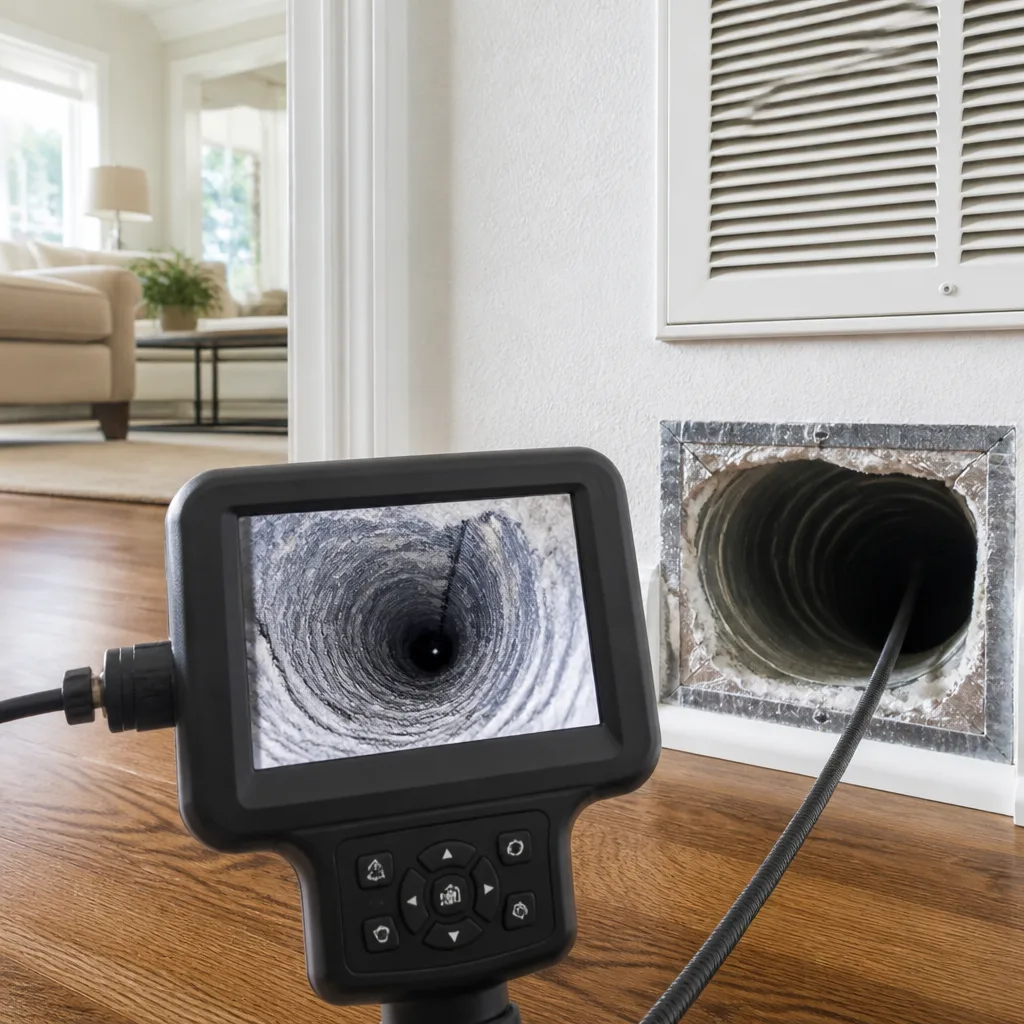 Camera inspection
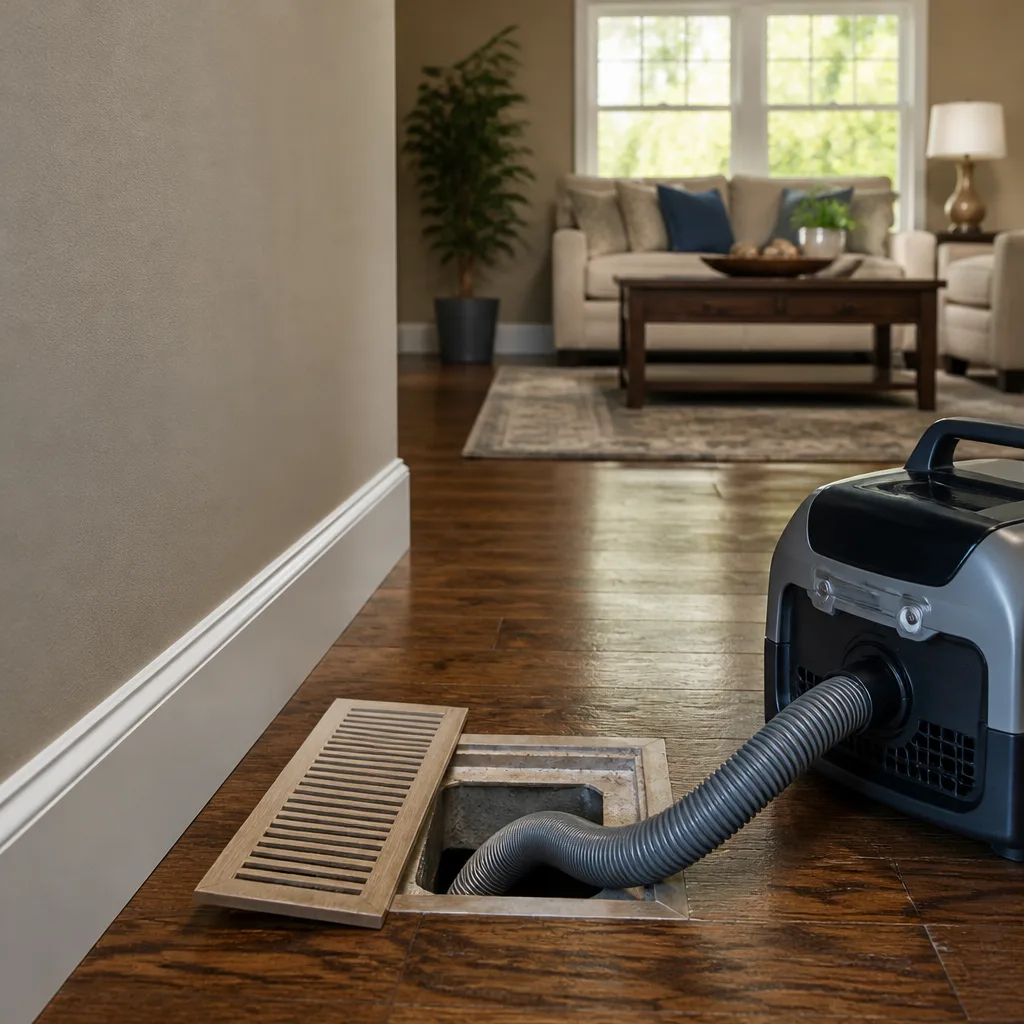 Sanitizing & deodorizing
Whole-system duct and dryer vent check with before-and-after photos - you see exactly what came out of your vents
That "$99 whole-house special" is a bait ad - the real number appears once they are in your hallway, or the "clean" is a shop-vac at the register. We photograph the inside of your ducts before and after instead.
Air Duct Cleaning Maintenance Checklist for Riverdale Homeowners
Changing your filter on schedule feels responsible. But a clogged secondary return hidden behind a bookcase can undo six months of careful filter maintenance in a week. That’s the part most Riverdale homeowners never see, because the return grille in the hallway looks fine while the branch behind the drywall loads up with dust, pet hair, and construction debris from the apartment renovation two floors up. A maintenance checklist worth keeping isn’t a reminder to “get the ducts cleaned eventually.” It’s a system-state tracker: a short set of observations you can make yourself, measured against what a pro checks with instruments, so you know whether your ductwork is holding up or quietly degrading between visits. This guide gives you that checklist, including the Riverdale-specific items that matter in prewar and postwar housing stock, plus the red flags that mean it’s time to pick up the phone.
Quick Answer
A practical air duct maintenance checklist for Riverdale homeowners has four frequencies: monthly (filter condition, return grille buildup, airflow feel at registers), pre-season (before heating and before cooling), annual (a full inspection of visible joints, insulation, and condensation), and post-event (after renovation, flooding, or pest activity). Anything you can see or feel is yours to monitor; anything that needs a pressure reading, a moisture meter, or a look inside the plenum is a call to a professional. Document each check with phone photos so you have a real baseline before the next cleaning.
Styles & brands we work with
- Whole-home duct cleaning
- Dryer vent cleaning
- Camera inspection
- Sanitizing & deodorizing
Table of Contents
- What You Can Check Yourself vs. What Needs Instruments
- The Monthly Checklist (Ten Minutes, Four Checks)
- The Pre-Season Checklist: Heating and Cooling
- Riverdale-Specific Items: Humidification Scale and Duct Condensation
- Post-Event Checks: Renovation, Flooding, Pest Activity
- How to Document Your Baseline with Phone Photos
- Red Flags: When an Observation Becomes a Phone Call
- What a Professional Visit Actually Covers
What You Can Check Yourself vs. What Needs Instruments
The line between owner checks and professional checks isn’t about difficulty. It’s about whether the answer requires a measurement you can’t make with your eyes and a hand. You can see a filter loading up. You can’t see static pressure dropping across a clogged evaporator coil without a manometer. You can feel weak airflow at a register. You can’t tell whether that weakness comes from a crushed flex run, a disconnected joint inside a wall cavity, or a blower wheel caked with dust until someone opens the unit.
Here’s the practical split we walk Riverdale homeowners through:
- Yours to check: filter condition and fit, dust buildup on return grille covers, visible duct joints in basements and utility closets, airflow feel at each register, condensation on exposed duct runs, and any new odors.
- Needs a professional: static pressure readings, airflow measurement at the air handler, moisture readings inside duct insulation, camera inspection of branch runs, blower and coil condition, and any joint hidden behind drywall or above a finished ceiling.
- Needs special attention: anything involving gas appliances, electrical connections at the air handler, or work inside a panel. Leave those alone and call someone trained.
The point of separating them is that you build a real picture of your system without pretending to be an HVAC technician. You learn what “normal” looks like for your apartment or house, so when something changes, it registers. That’s the whole value of a checklist. It turns vague unease into a specific observation you can describe when you call for air duct cleaning.
The Monthly Checklist (Ten Minutes, Four Checks)
Four checks, ten minutes, once a month. That’s the core of the tracker, and it’s short on purpose. A checklist you won’t actually do is worse than no checklist, because it gives you false confidence. These four are quick enough to fold into a weekend routine.
- Pull one filter and look at it against a light. If you can’t see light through it, it’s done. Check the fit too: a filter that’s a quarter inch too small lets air bypass around the edges, which means the dust it should have caught went straight into the coil and the ducts.
- Wipe a finger across one return grille. A light film is normal between cleanings. A mat of gray fuzz that lifts off in a sheet means the return is pulling heavy particulate, often from a nearby kitchen, bathroom exhaust, or a pet bed.
- Hold a tissue to each supply register. It should flutter steadily. Compare registers against each other. One weak register in an otherwise strong system is the classic sign of a branch run that’s crushed, disconnected, or blocked.
- Smell the air near one return for a few seconds. Musty, sour, or “wet basement” notes are worth writing down with a date. Odor that comes and goes with the weather is very different from odor that’s constant.
Write the results down, even if it’s one line on a notepad app. Ten minutes a month builds a record that’s genuinely useful when a technician asks you how long the smell has been there. In our experience across Riverdale housing stock, the difference between a resolved problem and a frustrating one is almost always whether the owner can describe the timeline. You can, if you’ve been tracking.
The Pre-Season Checklist: Heating and Cooling
Twice a year, before you switch the system into its heavy season, run a deeper set of checks. In Riverdale, that means before the first real cold snap in late fall and before the first sticky stretch in late spring. The work overlaps, but the focus shifts.
Before heating season
- Replace the filter, and note the date on the edge of the frame in pencil.
- Look at the return grille near the boiler or furnace. Heat rises and dust settles; returns low on a wall often load heavier than ceiling returns.
- Check for soot or scorching at any duct penetration near the flue. Anything unusual there is a call to a professional, not a cleaning task. Gas and combustion issues belong to someone trained and equipped for them.
- Confirm all supply registers are open and unobstructed by furniture, rugs, or a sliding bookcase.
Before cooling season
- Replace the filter again, and check the condensate drain line for clogs or standing water.
- Feel the air coming off the registers after a few minutes of running. Cold but weak air points at airflow restriction; cold and strong air is what you want.
- Look at the ductwork nearest the air handler for condensation (more on this below).
The pre-season check catches the obvious stuff before it becomes a mid-season surprise. If you find something during this pass, you still have time to schedule a visit without sitting in a hot or cold apartment for a week. That timing matters more than most homeowners realize.
Riverdale-Specific Items: Humidification Scale and Duct Condensation
Two items on this checklist are here because of where you live. Riverdale sits in a hard-water area, and much of the housing stock is older, with duct systems that were retrofit into buildings that weren’t originally designed for them. Both facts create specific, checkable issues.
Humidification scale buildup
If your home has a whole-house humidifier tied into the duct system – a common setup in Riverdale apartments and houses that run dry in winter – the water it uses is hard. Over time, mineral scale collects on the humidifier pad, the water panel, and the downstream duct surfaces. You’ll notice white crust or chalky residue near the humidifier housing, or a mineral smell when heat runs. Scale buildup reduces humidifier output and can flake into the airstream. Check the water panel monthly during heating season, and look at the duct surface just downstream for white deposits. If you see heavy scale, a professional can assess whether the panel needs replacement and whether the ductwork downstream needs cleaning. Familiarity with air quality and sanitizing work helps here, because scale and microbial growth often show up together in the same humidification zone.
Duct condensation and vapor barriers
Older Riverdale buildings often have duct runs through unconditioned spaces – attics, basements, crawl spaces – where the vapor barrier is thin or compromised. In summer, cool air moving through a duct in a warm, humid space causes condensation on the outside of the duct. You’ll see water stains on the insulation jacket, damp spots on a basement ceiling, or rust at the seams. Left alone, that moisture feeds mold and rusts the ductwork from the outside in. Check the duct nearest the air handler and any exposed run in a basement or garage. If you find damp insulation or standing water at a seam, that’s a call-a-pro item, not a wait-and-see. Sealing and repair work is often the right fix, and it’s better handled before the next cooling season.
Post-Event Checks: Renovation, Flooding, Pest Activity
Some of the most important checks aren’t on a calendar at all. They happen after something changes in the home. Three events in particular warrant a full walk-through and, often, a professional visit.
After renovation
Drywall dust is finer and more abrasive than ordinary house dust, and it travels through the system fast. If you’ve had walls opened up, sanded, or painted, expect the ductwork to capture a lot of gypsum dust. Change the filter immediately after the work ends, then again in a few weeks. Look at the return grille nearest the renovation for a chalky film. If the renovation was substantial, a professional cleaning makes sense because gypsum dust that settles in the ducts can recirculate for months.
After flooding or a water event
Any water that reaches ductwork, insulation, or the air handler is a serious concern. Moisture inside a duct system feeds microbial growth quickly. Don’t run the system if you suspect duct insulation got wet. A professional inspection with a moisture meter and a look inside the runs is the only reliable way to know whether the insulation needs replacement. Sanitizing treatment after a water event is standard practice for good reason – mechanical cleaning alone doesn’t address what’s already started growing.
After pest activity
Mice and insects use duct runs and the gaps around them as highways. If you’ve had a pest problem, look for droppings near the air handler, gnaw marks on flexible duct at joints, and a musty or ammonia smell near registers. Pest activity is a call-a-pro item – both for the cleaning and for the repair, because a chewed flex run needs replacement, not just vacuuming. This is one of those cases where a surface vacuum does more harm than good.
How to Document Your Baseline with Phone Photos
Here’s the single most useful habit in this entire guide: photograph your duct system before anything gets cleaned. A baseline set of photos turns “I think it’s dirtier than last time” into a comparison you can actually make. And when a technician does the work, before-and-after photos of your own ducts are how you verify the job was done.
Take these baseline photos:
- Each return grille cover, straight on, in good light. Include a coin or a ruler for scale.
- Each supply register, with the diffuser in place.
- Any exposed duct run in a basement, utility closet, or garage – especially joints, seams, and the connection at the air handler.
- The air handler and any humidifier housing, if accessible without opening panels.
- The filter, held up to a light, before you change it.
Name the photos with the date (your phone does this automatically) and keep them in one album. Repeat the set after every professional cleaning. The comparison is the point: a grille that looked lightly dusty in March and heavily loaded in September is telling you something, especially if you haven’t changed anything about the household. We like before-and-after photos as a verification tool because they show the work rather than describe it, and any reputable provider should be willing to take them for you. Keep a copy for your own records either way.
Red Flags: When an Observation Becomes a Phone Call
Each checklist item has a threshold where it crosses from “monitor” to “call.” Here’s that column, laid out plainly.
- Filter: Monitor a filter that’s evenly gray and still passes light. Call if the filter edge shows a visible dust trail around the frame (air bypass) or if you’re changing filters more often than once a month with no pets and no renovation.
- Return grille: Monitor a light film. Call if the dust lifts off in sheets or comes back within days of wiping.
- Airflow at registers: Monitor small differences between rooms. Call if one register is dramatically weaker, or if the whole system feels weaker than it did a season ago.
- Odor: Monitor a faint musty note that appears only in humid weather. Call if the smell is constant, if it’s stronger near one room, or if it’s ammonia-like.
- Condensation: Monitor a single water stain you can tie to a storm. Call if you find active dampness, standing water, or rust at seams.
- Visible duct joints: Monitor small gaps in flexible duct tape. Call if you see disconnected joints, torn vapor barrier, or duff that’s collapsed inside a ceiling.
- Humidification scale: Monitor light white dusting near the unit. Call if scale is heavy enough to flake, or if the humidifier has stopped keeping up.
When in doubt, call. A single ten-minute visit can answer the “is this serious?” question better than a month of monitoring can. The Riverdale Air Duct Cleaning team handles the full system – cleaning, repair and sealing, and sanitizing – so the answer to a red flag doesn’t leave you stitching together three different contractors.
What a Professional Visit Actually Covers
A real duct cleaning visit is a process, not a vacuum pass. Understanding what it should include is how you tell the difference between a thorough job and a quick one. Here’s what a proper visit looks like from the air handler to every register.
The best systems go in two stages. First, rotary brush agitation – a Rotobrush-style system runs a spinning brush through each branch run to break loose the dust that clings to walls. Then negative-air extraction with a Nikro or similar machine pulls the loosened debris out and holds it. Containment matters: an Abatement Technologies air scrubber running on-site keeps airborne particulate down while the work is happening, which is the standard in restoration-grade work. If a provider cleans without controlling where the dust goes, some of it ends up back in your living room.
A thorough visit also covers the parts most cheap cleanings skip:
- Cleaning the blower wheel and evaporator coil as part of HVAC cleaning, since those surfaces feed the ducts.
- Inspecting duct joints and confirming they’re sealed, because clean ducts only stay clean if the system is sealed.
- Separate dryer vent cleaning when requested – a different system, but a common gap when homeowners only think about HVAC ducts.
- Sanitizing treatment for microbial and odor control where needed, beyond mechanical cleaning alone. Familiarity with Honeywell and Aprilaire filtration and humidification systems helps a technician assess whether a filtration upgrade would cut down future buildup.
Ask for before-and-after photos and a clear description of what was found. If the visit is thorough, the technician will tell you what they saw and what they didn’t clean, not just hand you a bill.
Common Mistakes to Avoid
- Relying on the filter alone. A good filter is one input among several. If your return grille near the kitchen loads heavy because cooking aerosol gets pulled in, the filter needs more frequent attention and the return needs occasional cleaning. Filter discipline can’t fix a poorly placed return.
- Assuming your building’s shared system is someone else’s concern. In Riverdale multifamily buildings, ductwork is often connected across units or shared returns. Check with your building’s manager before scheduling a cleaning that affects shared runs. Nothing causes more confusion than a technician arriving to clean a system that’s partly the building’s responsibility.
- Judging airflow by sound. A register can be loud and still deliver weak airflow, because turbulence makes noise. Judge by the tissue test at each register, not by volume.
- Ignoring the dryer vent. Lint collects far faster than most people expect, and a restricted dryer vent is a fire risk. Clean the lint trap after every load, inspect the vent run once a year, and don’t wait for the dryer to stop drying efficiently.
- Cleaning after a renovation but not after the dust settles. Gypsum dust keeps drifting for weeks. A single cleaning right after the work ends can miss dust that’s still settling into the returns. A filter change two to three weeks out is worth as much as the cleaning.
- Trusting a coupon price. The low-price-then-upsell model is common in this trade. If a phone quote doesn’t account for your home’s size or your system’s scope, it isn’t a quote. Ask for a per-system price, agreed before work starts.
- Skipping the baseline photos. Without before photos, you can’t tell whether the work was done thoroughly, and you can’t compare this cleaning to the last one. Two minutes with your phone solves both.
See the difference
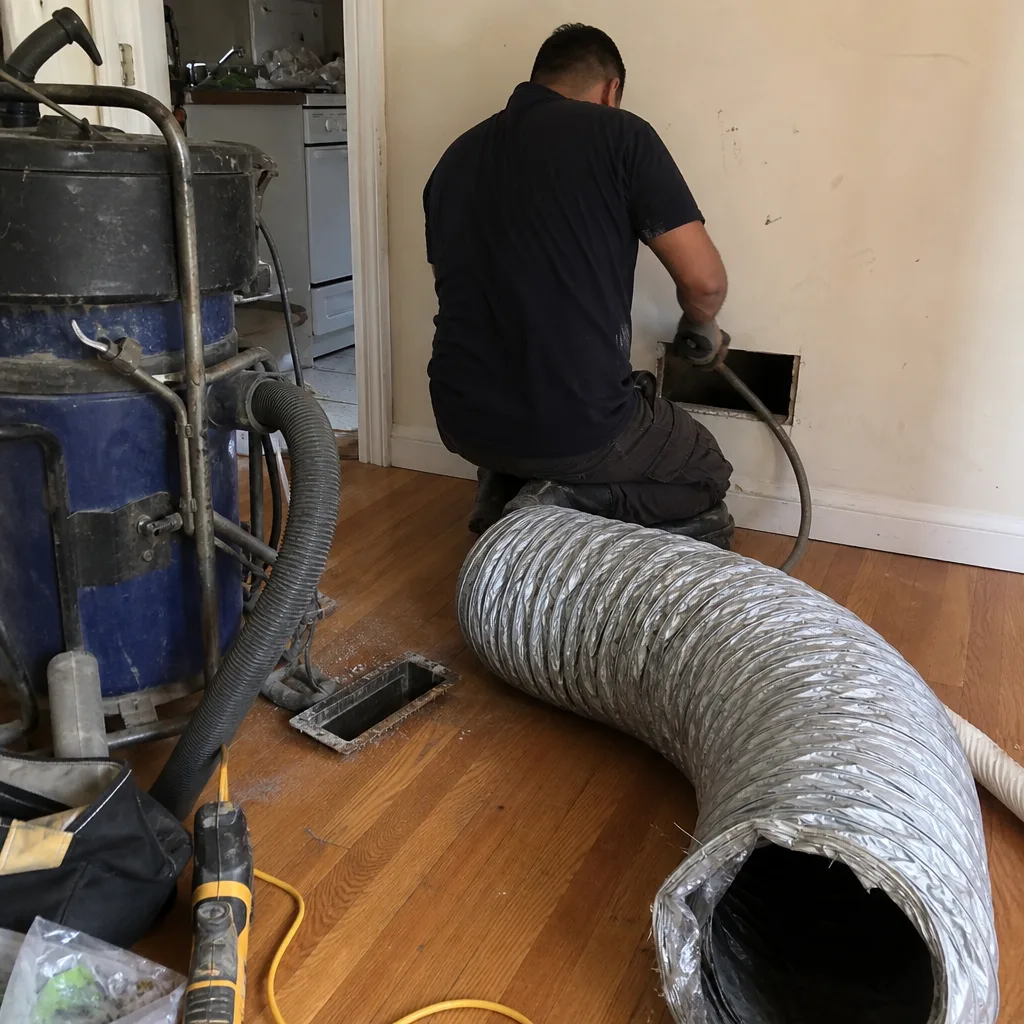 Before
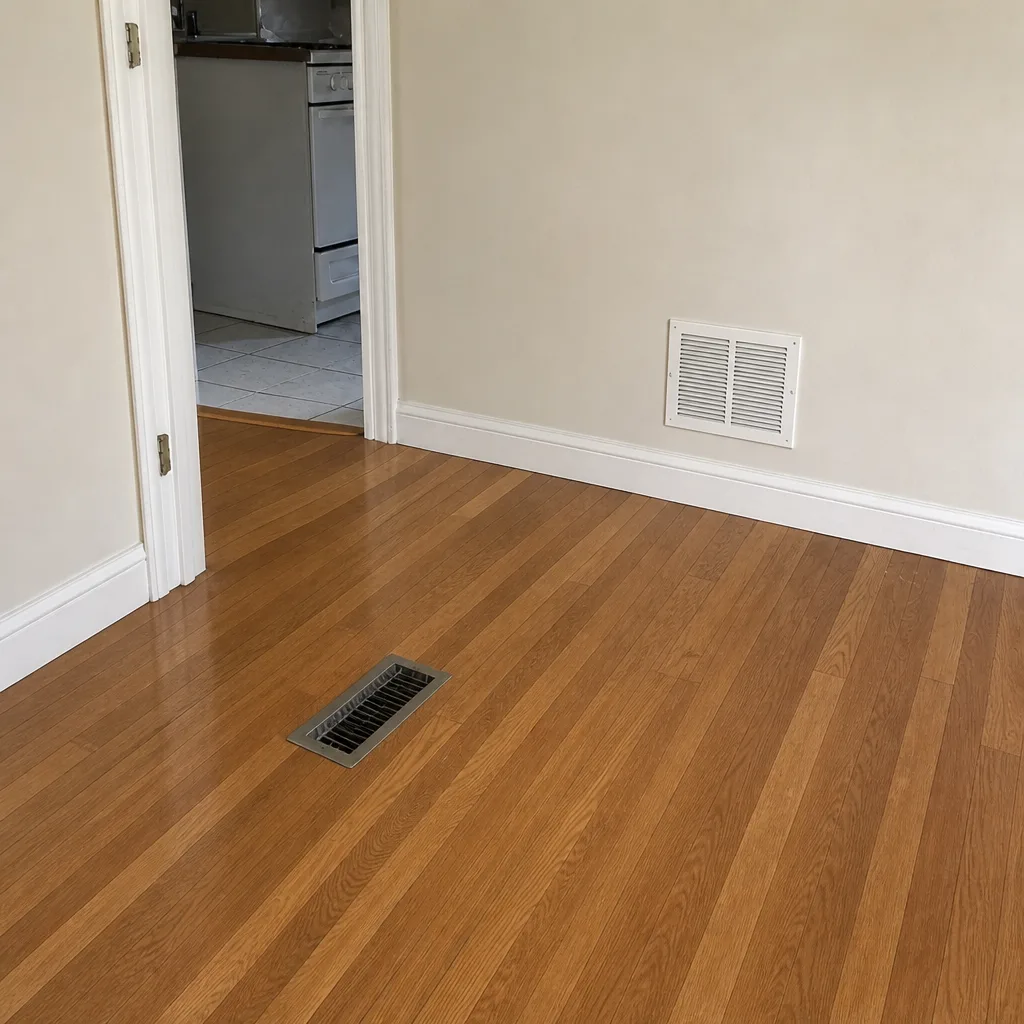 After
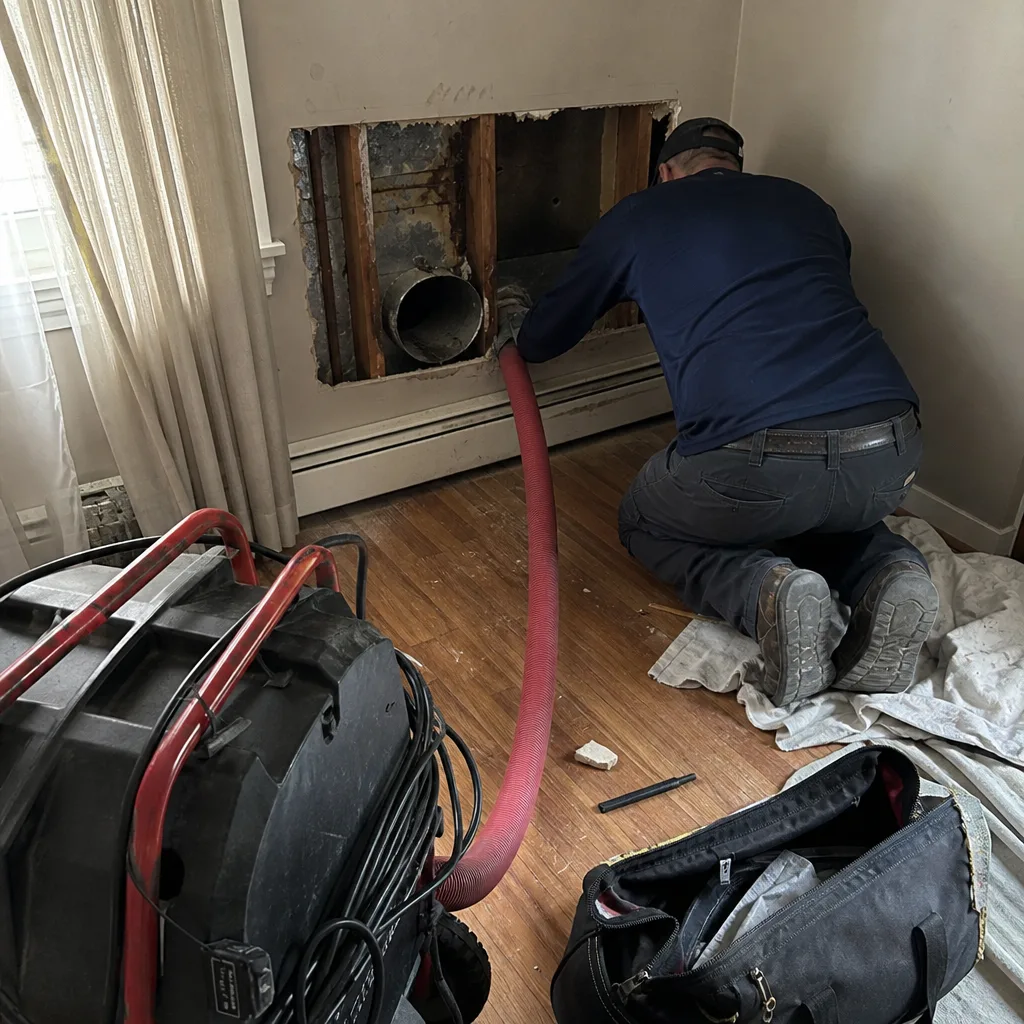 Before
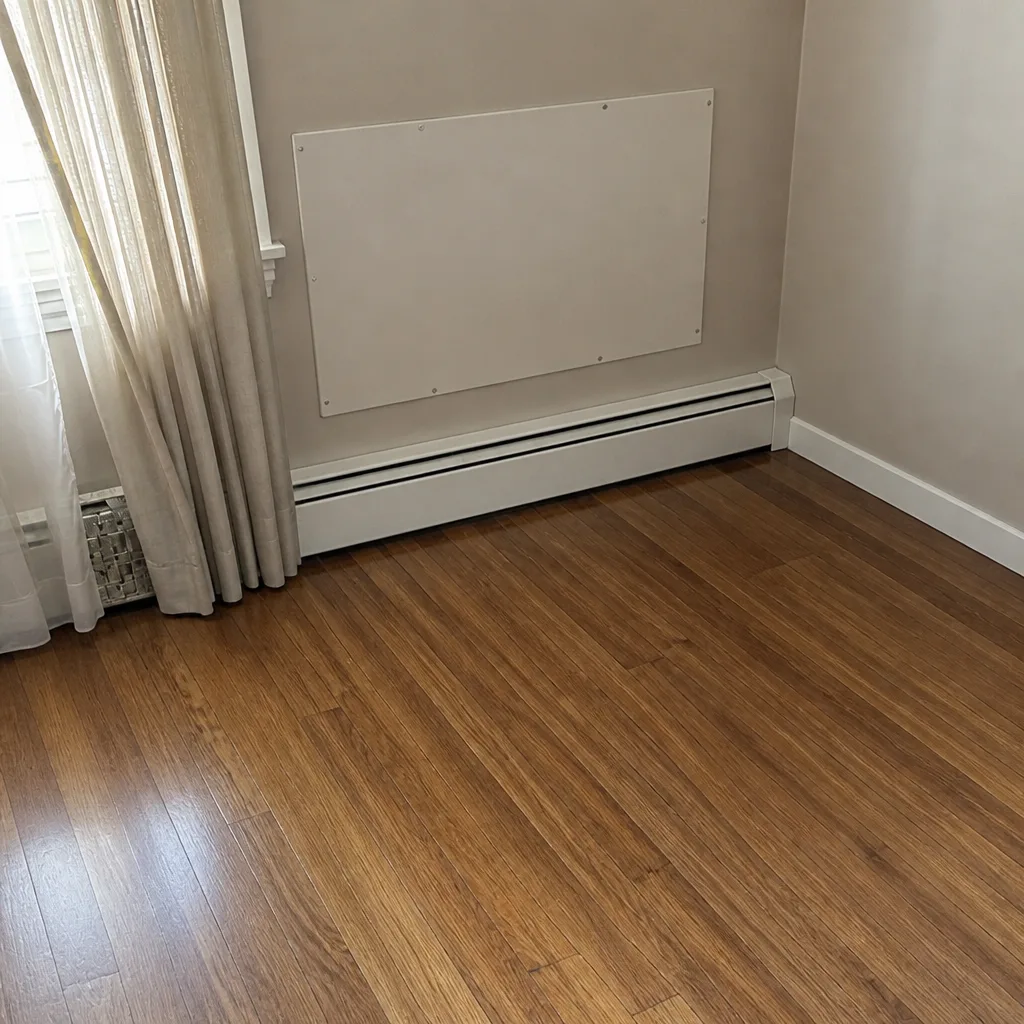 After
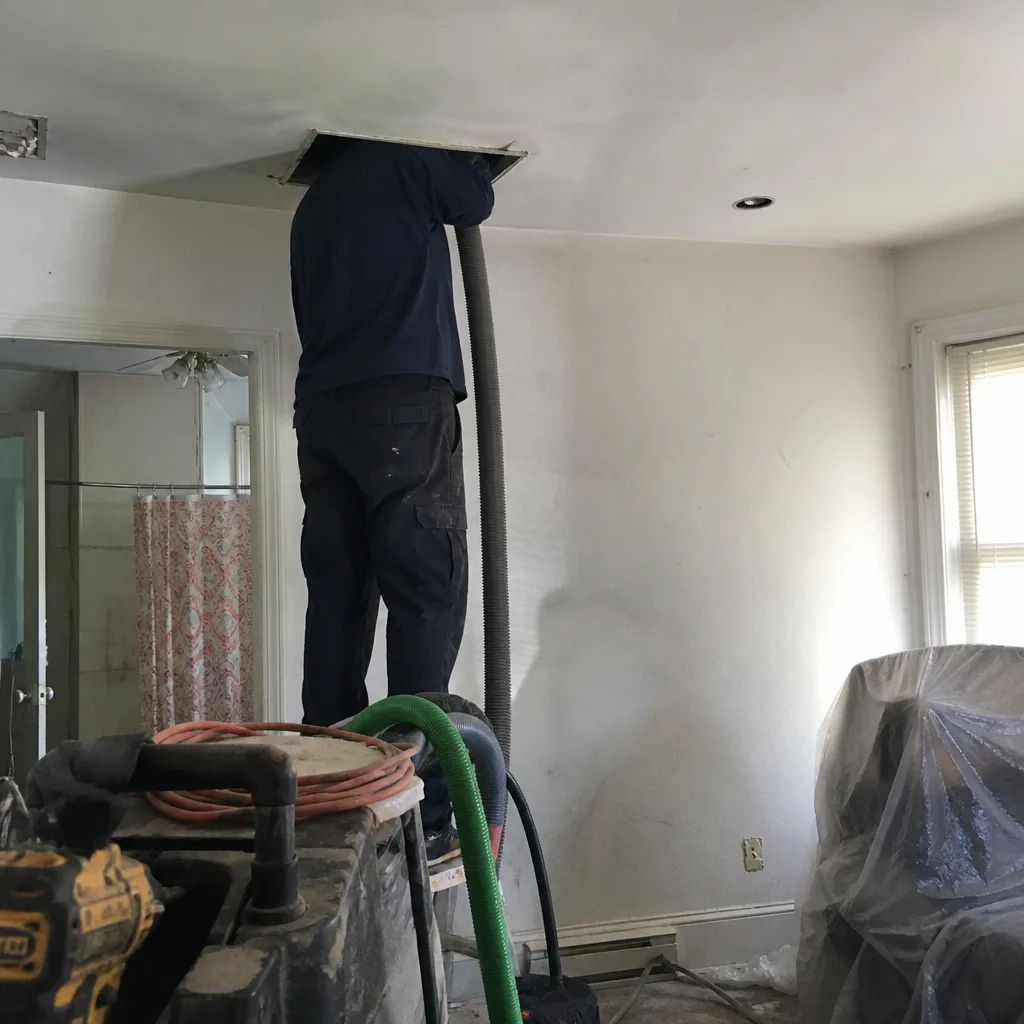 Before
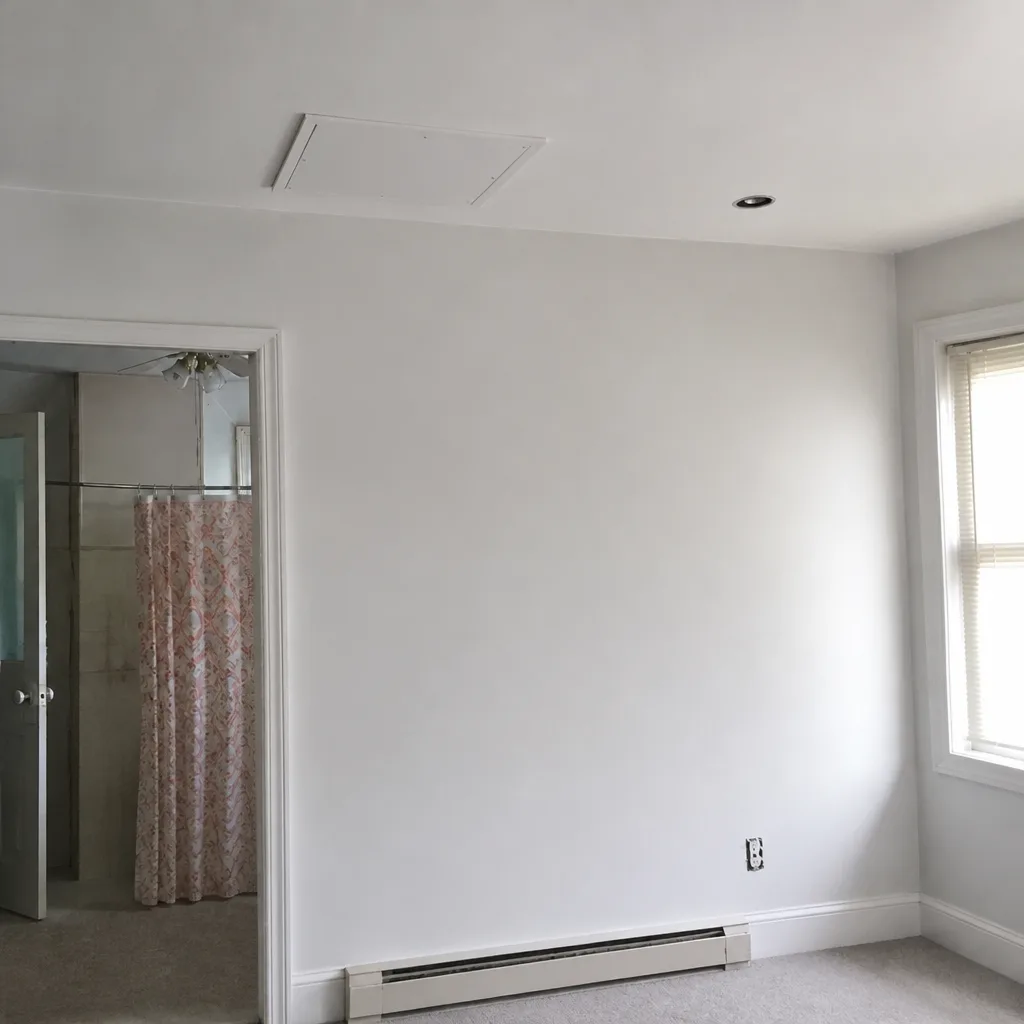 After
When to Call a Professional
Call a professional if any red flag above crosses from monitor into active. That includes: a persistent musty or ammonia smell, active condensation or damp insulation at a duct seam, a register that’s dramatically weaker than the others, visible disconnected or torn ductwork, heavy humidification scale, a system that hasn’t been serviced in several years, or anything after a renovation, water event, or pest problem. Don’t wait for the next seasonal shift if you’re seeing any of these – airflow and moisture problems tend to get more expensive the longer they sit.
Riverdale Air Duct Cleaning offers free estimates in Riverdale. Call (877) 792-7057. We answer 24/7. Fast dispatch from 7am to 7pm, Sunday through Friday. Our technicians have up to 13 years of experience, and we can work with your insurer when a water event or storm is the reason for the call.
Frequently Asked Questions
Most homes do well with a professional cleaning every three to five years, and sooner if you have pets, a renovation, a water event, or a member of the household with allergies. Between cleanings, the monthly and pre-season checks in this guide do the real work. If you notice persistent odor, uneven airflow, or heavy buildup on return grilles, don’t wait for the multi-year mark. Call (877) 792-7057 for an exact quote – estimates are free.
No, not thoroughly, and we’d steer you away from trying. A shop vacuum can’t agitate dust off duct walls, and it can’t contain debris the way a negative-air machine does. Worse, a vacuum on a branch run can push some debris deeper into the system. What you can and should do is the homeowner-side checklist – filters, grille condition, airflow feel, odor, condensation – and then call a professional for the actual cleaning. Home checks are diagnostic, not remedial.
Pricing depends on the size of the home, the number of registers, and the scope – cleaning alone versus cleaning plus repair, sealing, and sanitizing. We price per system, not per vent, and the price is agreed before work starts. That’s the model you should ask for from anyone. The low-coupon-then-upsell approach is common in this trade, and it’s the reason so many homeowners dread the first call. Call (877) 792-7057 for an exact quote – estimates are free.
Because they’re often for less work, not the same work at a lower price. A cheap quote may cover only surface vacuuming of the main trunk, skip the rotary brush agitation that gets dust off the walls, and skip the blower and coil. When the technician arrives, additional charges appear for the scope you assumed was included. Ask upfront what the price covers – main trunk, branches, registers, blower, coil – and get it in writing. Call (877) 792-7057 for an exact quote – estimates are free.
Before-and-after photos of your own ducts, taken by the technician and shared with you. Any thorough provider should be willing to do this. You can also check the return grille and one register you remember clearly after the visit, and compare against your baseline photos. If you took the baseline set, verification is easy. If you didn’t, ask for the provider’s photos. Call (877) 792-7057 for an exact quote – estimates are free.
Homeowners should clean the lint trap after every load and inspect the vent run once a year. A professional dryer vent cleaning is worth doing every one to two years for most households, and annually for large families or anyone drying heavy loads. A restricted vent is a fire risk, and it’s separate from the HVAC duct system. Call (877) 792-7057 for an exact quote – estimates are free.
The Bottom Line
A maintenance checklist isn’t a reminder to schedule a cleaning eventually. It’s a system-state tracker that tells you, once a month, whether your ductwork is holding up or quietly degrading. Do the four monthly checks. Run the pre-season pass before heating and cooling. Watch for the two Riverdale-specific items – humidification scale and duct condensation – because they show up here more than most places. Document a baseline with your phone. Then use the red-flag thresholds to know exactly when an observation becomes a phone call. Most of the work is yours. The rest, when it comes, should be a process you understand from air handler to every register.
Call (877) 792-7057 for a free estimate. We can assess your full system – cleaning, repair and sealing, dryer vent, and air quality – with equipment rated for restoration work. We answer 24/7. Fast dispatch from 7am to 7pm, Sunday through Friday.
Written by the team at Riverdale Air Duct Cleaning.